Skills management and skills evaluation 📊
Evaluate the skills and performance of employees, support their development to prevent high turnover.
- 14 days free
- No credit card required



Skills Management
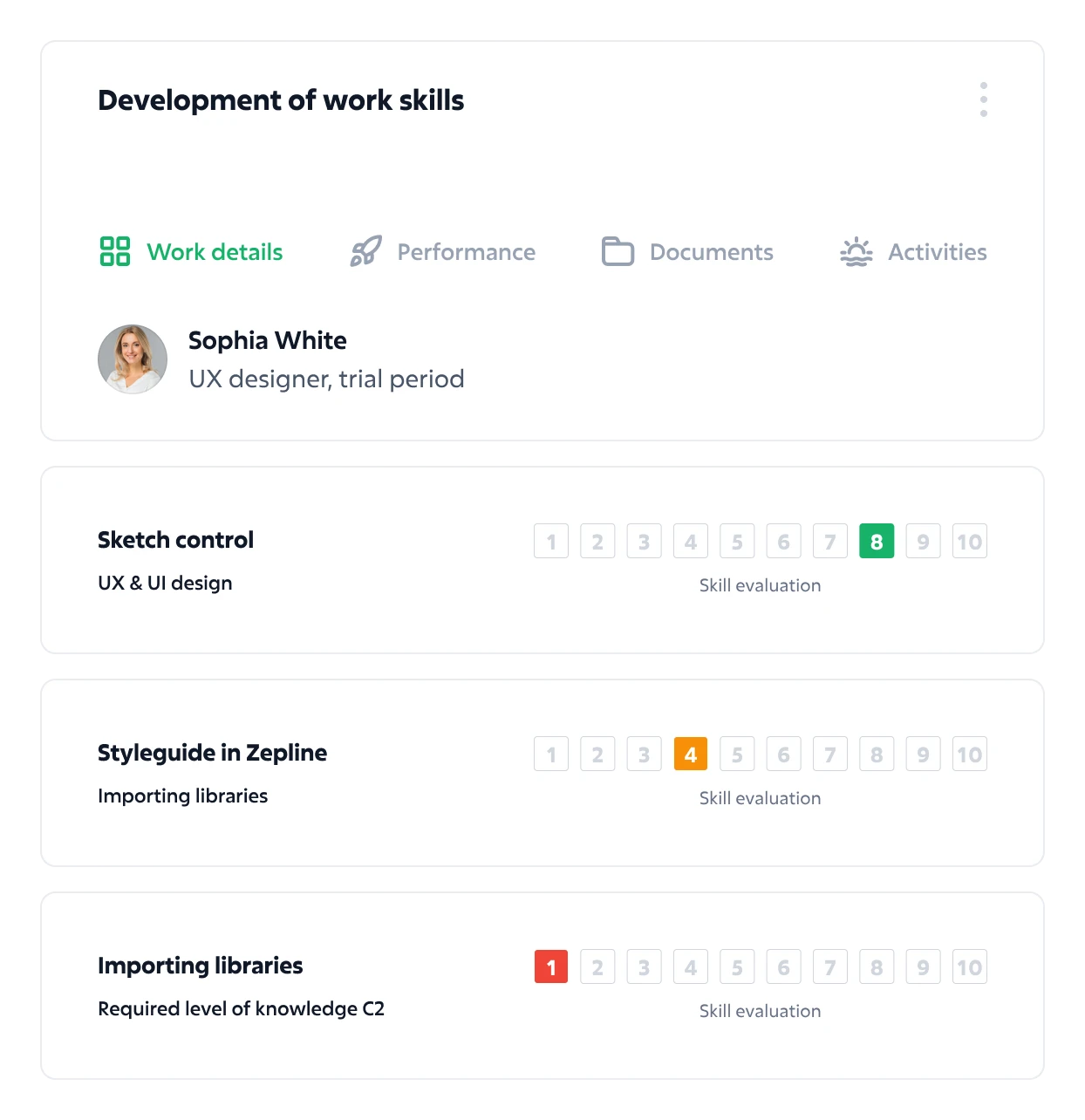
Developing work skills
Keep track of the skills needed for each role in the company. Create skill sets based on specific role, team or seniority. Add individual skills (competencies) for specific people for a future development assessment.
- Individual skill sets
- Skill sets for specific teams and positions
Skills assessment
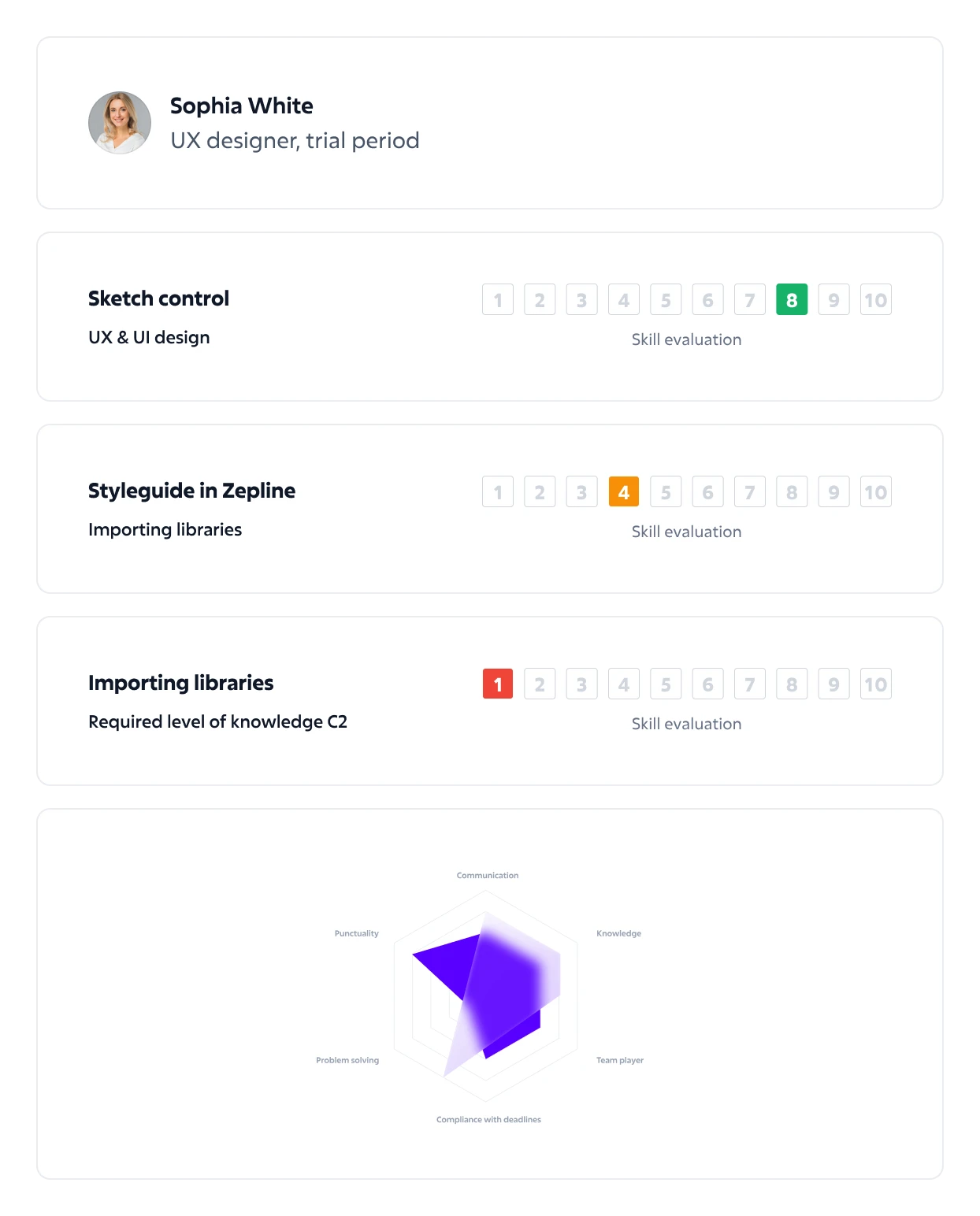
Evaluation of skills
Evaluate how your colleagues are improving in their skill sets. Track how their skills develop over time and add meaningful development activities or plan their career growth more effectively based on this.
Can we help you?
Our experts will answer questions, show you Sloneek , and help modernize your HR.
- Superior onboarding
- Introduction of all functionalities
- Presentation and offer tailored to your HR
- Answer any questions


Leave us your contact details, we will get back to you.
How to Turn Skills Management into a Strategic Advantage
Skills management is far more than just a list of abilities, training courses, or a record of certifications. In reality, it can be a powerful strategic tool that helps a company grow, innovate, and retain top talent. By implementing a robust skills management platform, organizations can transform their approach to employee development and achieve significant organizational success.
Connecting Skills to Business Strategy
When a company understands the capabilities of its workforce, it can better plan future projects and investments. Effective skills management allows an organization to:
- Determine if the team possesses the necessary technical and management skills for digitalization.
- Identify the need for reskilling before launching new projects.
- Align employee development with long-term company goals, making strategic workforce planning more effective.
- Improve resource allocation by matching the right people to the right tasks.
A core component of this is conducting a thorough skill gap analysis. This process helps identify skills gaps between the current employee skills and what is needed for future growth, ensuring that training programs are targeted and effective.
Leadership Skills: The Deciding Factor for Organizational Success
Today, leadership and management skills are what determine whether a company can handle the pressures of change, attract talent, and maintain a competitive edge. Strong leadership skills are not just about managing a team of people; they are far more comprehensive. A true leader must manage:
- Themselves: This involves strong self-management skills, including time management, stress management skills, personal discipline, and the ability to switch between business issues and human needs. Improving these self-management skills is crucial for any leader.
- Other People: This includes team management skills, motivation, conflict management skills, and providing constructive feedback. Excellent people management skills are essential here.
- Business Processes: This encompasses strategic planning, financial management, working with skills data, and translating business needs into the team's operational processes.
Technical management skills are also important, such as proficiency with digital tools, reporting, and using AI to support decision-making and daily agendas. Knowing how to improve management skills is a continuous journey for any effective leader. Many of these competencies can be highlighted on a management skills for resume section to showcase a candidate's capabilities.
Enhancing Leadership and Management Capabilities
Management skills are not fixed; they can be intentionally developed just like any other ability. The path to improvement includes:
- Training, coaching, or mentoring: Structured learning programs are vital.
- Self-management skills: Conscious work on time management, task management, prioritization, and self-education.
- Data management skills: Analytical abilities and working with data using technology.
- Reskilling and upskilling: Continuous learning and acquiring new competencies within the company.
Modern tools play a significant role in this process. For example, a skills management software like Sloneek helps companies map employee abilities, evaluate them, and plan their development. This applies to both general management skills and the specialized skill competencies of specific roles. This kind of HR software acts as a centralized database for all employee skills, making skills tracking and competency management seamless.
Leveraging a Skills Matrix and Skills Profiles
A key feature of any good skills management platform is the skills matrix. This tool provides a visual representation of the skills across the organization, allowing managers and team leads to quickly identify strengths, weaknesses, and skills gaps. Each employee has a skills profile that details their specific abilities, certifications, and experience, categorized by skill category.
By analyzing the skills matrix, management can pinpoint training needs and set training priorities. This data-driven approach ensures that the training time is used effectively and that training plans are aligned with strategic objectives. Productivity reports and performance metrics can be used to measure the impact of these training programs and track training completion.
Talent Management, Retention, and Succession Planning
Employees want to grow and feel that their work has meaning. With skills management, a company has the tools to:
- Offer personalized development plans.
- Support internal career management and mobility through a Talent marketplace.
- Prevent turnover by showing employees a clear path to improving their skills, which boosts employee engagement.
- Facilitate succession planning by identifying and preparing high-potential employees for future leadership roles.
This proactive approach to employee development ensures that the organization has a pipeline of skilled workers ready to step into critical positions.
Data-Driven Decision-Making and Strategic Planning
Modern skills management software like Sloneek enables real-time data analysis. This skills intelligence allows managers to answer critical questions:
- Which teams have strong skills, and where are their weaknesses?
- Where do we need to strengthen leadership skills in management to handle change?
- How can we effectively allocate people to projects based on their abilities?
The software also allows for tracking and evaluating skill competencies by team, position, or individual. It clearly displays the development of skills over time and their connection to development activities, which is invaluable for resource management and capacity planning.
Innovation, Adaptability, and Operational Processes
Organizations that can manage skills effectively are prepared for unexpected changes, whether they are new technologies, market shifts, or legislative updates. Skills management thus builds company resilience and the ability to innovate quickly. It also helps in streamlining operational processes by ensuring that worker skill levels match the demands of their roles. This is where digital skills management becomes a competitive advantage.
Employer Branding and Attractiveness in the Job Market
Companies that openly communicate their commitment to developing their people and have a transparent skills management system are more attractive to job seekers. This strengthens their employer branding and allows them to attract top talent, which is crucial for successful recruitment initiatives.
Conclusion: Why Skills Management Is No Longer Just a "Nice-to-Have"
In an era where AI, automation, and hybrid work models are redefining the work environment, the meaning of "being able to do the job" is also changing. It is no longer enough to have just technical knowledge. Success comes from a combination of adaptability, continuous learning, creativity, and data literacy. Among the fastest-growing competencies are AI and big data, analytical thinking, creativity, resilience, flexibility, curiosity, and lifelong learning. It is necessary to map these trends and work with them in competency models and organizational behavior. Effective skills management is the key to navigating this new landscape and achieving sustained organizational success.