Digital signature
What Is a Digital Signature? A Complete Guide for Modern Business
In the fast-paced world of digital business, waiting for ink to dry on paper is a luxury few can afford. Digital signature technology has revolutionized how organizations handle agreements, offering a secure, legal, and efficient alternative to traditional methods.
But what is a digital signature exactly? Simply put, while it may look like a scribble on a screen, it is much more than just an image. It is a sophisticated technology that binds a digital document to a specific identity, ensuring that the content has not been altered after signing.
What Is a Digital Signature and What Is Its Purpose?
A digital signature is a mathematical scheme for demonstrating the authenticity of digital messages or documents. Its primary purpose is to provide identity verification and data integrity.
In a legal context, it serves as a binding way to confirm consent, approval, or obligations. This applies across the board — from internal HR agendas and contract management to external communication with government bodies. It transforms electronic data into legally enforceable records.
When you see a digital signature on a document, it signifies three things:
- Authentication: You know who signed it (origin authentication).
- Integrity: You know the document hasn’t changed (document integrity).
- Non-repudiation: The signer cannot later deny having signed it.
The Mechanics: What Is a Digital Signature and How Does It Work?
To understand electronic signature security, we must look under the hood. The process relies on digital signature technology and cryptographic methods.
Role of Cryptography
The core of this technology is public key cryptography (also known as asymmetric cryptography or asymmetric encryption). This system uses a pair of cryptographic keys:
- Private Key: Known only to the signer, used to create the signature.
- Public Key: Shared with everyone, used to verify the signature.
The Digital Signing Process
Here is a simplified breakdown of the digital signing process:
- Hashing: The software uses a hash function (a type of cryptographic algorithm) to turn the document data into a fixed-size string of characters called a cryptographic hash.
- Encryption: The signer’s private key encrypts this hash. This encrypted hash is the digital signature.
- Verification: The recipient uses the signer’s public key to decrypt the hash. The software then calculates a new hash of the received document. If the two hashes match, the signature is valid, ensuring message integrity and transaction integrity.
This cryptographic transformation ensures that even the slightest change to the document would alter the hash, causing the verification to fail.
Types of Signatures and Legal Frameworks
Not all electronic signatures are created equal. While terms like electronic signature and digital signature are often used interchangeably, there is a distinction in security levels.
From Simple to Qualified
In the context of global standards, including the eIDAS regulation (which outlines EU-qualified electronic signatures law), signatures are generally categorized into three levels:
- Simple Electronic Signature: A basic electronic form of acceptance, like a scanned signature or a “I Agree” checkbox.
- Advanced Electronic Signature (AES): An Advanced Digital Signature that is uniquely linked to the signer and capable of identifying them.
- Qualified Electronic Signature (QES): The gold standard. It requires a digital signature certificate issued by a Qualified Trust Service Provider.
What Is a Certified Digital Signature?
A certified digital signature (often referred to as a verified digital signature) relies on a digital certificate. These certificates are essentially digital IDs issued by trusted third parties known as Certificate Authorities (CAs) or a certification authority.
These authorities act like a digital passport office. Just as an electronic passport verifies your identity for travel, a digital signature certificate verifies your identity for electronic transactions. This infrastructure supports Verifiable Credentials and ensures source/entity authentication.
What Is a Digital Signature Certificate?
A digital signature certificate is an electronic file that acts as a digital passport. It contains your public key, your identity details, and the digital signature of the Certificate Authority that issued it.
When you use a digital signature provider, they utilize these certificates to validate the signing process. This ensures that the electronic identification provided is legitimate.
Security Standards and Best Practices
Digital signature software must adhere to strict guidelines around encryption methods. Security is paramount, and it is achieved through:
- Advanced encryption: Utilizing robust encryption algorithms to protect the keys.
- Transmission with sender authentication: Ensuring data is safe during transit.
- Email authentication protocol: Often used in conjunction with signing links to verify the signer’s access.
- Cryptographic stamps: Used by organizations to seal documents, proving origin and time.
This security through encryption and the underlying cryptographic process make electronically-signed contracts often more secure than paper ones, which can be easily forged or altered.
Digital Signatures in HR and Business Workflows
For HR professionals, contract process bottlenecks are a major pain point. Digital workflows enable the seamless handling of digital documents.
How to Choose the Right System?
A robust digital document signing solution should offer customizable solutions that fit your operational demands. Whether you are using a single-tenant solution or a cloud platform, the tool should integrate digital wallet capabilities or easy access to digital ID tools.
Sloneek offers a comprehensive HRIS that integrates these capabilities.
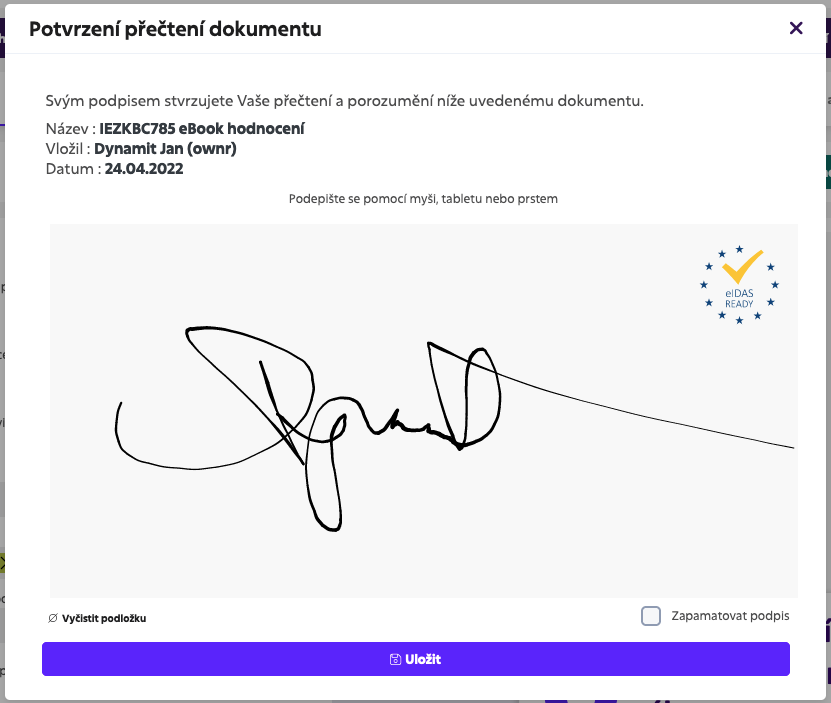
💡 Tip: In HR, documents are a daily reality. Waiting for a wet ink signature slows down the entire employee lifecycle. With Sloneek, you can upload employment contracts, amendments, and directives, sign them electronically, and archive them in one place. The system utilizes digital signature providers that comply with high standards, giving you legal certainty without the administrative burden.
What Counts as a Digital Signature?
Any method that meets the legal and technical requirements can be valid. However, a “manual digital signature” (drawing your name on a touchscreen) may not always meet the strict requirements of a digital signature scheme or digital signature algorithm needed for high-stakes documents.
To ensure you are using a verified electronic signature:
- It must be uniquely linked to the signer (identity verification).
- It must be capable of identifying the signer (digital identity).
- It must be created using electronic document signing means under the signer’s sole control.
- It must be linked to the data so that any subsequent change is detectable (data integrity).
Conclusion
The digital signature has countless functions in the modern business landscape. From software distribution verification to finalizing multi-million dollar contracts, it is the bedrock of trust in the digital age.
By adopting digital signature software like Sloneek, businesses can ensure transaction integrity, improve electronic authentication methods, and streamline their operations. Whether you are dealing with Advanced Electronic Signatures or standard electronic document signing, the move to digital is not just about speed — it is about security, compliance, and efficiency.

Can we help you?
Our experts will answer questions, show you Sloneek , and help modernize your HR.
- Superior onboarding
- Introduction of all functionalities
- Presentation and offer tailored to your HR
- Answer any questions


