

Laloux’s Organizational Types


You may have already heard of “Teal” organizations—places where people manage themselves and traditional hierarchy takes a back seat. But are you aware that there are other “colored” organizational types, each revealing something unique about how a company is wired?
The concept of organizational types was famously described by Frederic Laloux in his book Reinventing Organizations (2014). The deeper you dive into this framework, the more you understand why some processes in your company run smoothly while others seem to constantly grind to a halt.
What Laloux’s Organizational Types Means
The color typology is based on a simple observation: the way people collaborate evolves over time. As the complexity of the world increases, so does our understanding of authority, responsibility, and decision-making. Frederic Laloux tracked this evolution by analyzing organizations across various industries, summarizing his findings in this groundbreaking work.
Each color offers a different perspective on how companies respond to the reality of their era. Each emphasizes a different approach to power, order, performance, or relationships. The “right” approach always depends on the specific company, its people, and the environment in which it operates. This understanding is crucial for modern organisations aiming to refine their organisational culture. It moves beyond surface-level rules to address values and demeanour, as well as the basic assumptions that drive corporate behaviour and human factors.
An Overview of Organizational Types
You might be asking yourself: What color is my company? Does performance, order, relationships, or autonomy play the leading role? This is where Laloux’s model becomes a practical tool. It describes five basic types of organizations, summarized in the table below.
Comparing Laloux with Westrum’s Typology
To better understand information flow, we can look at Westrum’s organizational typology. Westrum identifies three distinct cultural typologies: pathological (power-oriented), bureaucratic (rule-oriented), and generative (high-performance-oriented). These align closely with Laloux’s colors but focus specifically on how safety and information travel through a system.
A generative culture encourages inquiry, whereas pathological ones punish the messenger. This effectively creates a new organisational typology focused on safety and transparency.
Summary Table of Laloux’s Organizational Types
|
Area |
🔴 Red |
🟡 Amber |
🟠 Orange |
🟢 Green |
🔵 Teal |
|
Metaphor |
Wolf Pack |
Army |
Machine |
Family |
Living Organism |
|
Core Principle |
Power & Strength |
Order & Rules |
Performance & Success |
Values & Relationships |
Purpose & Evolution |
|
Management Style |
Authoritative |
Top-down command |
Management by objectives |
Participative |
Self-management |
|
Decision Making |
Leader decides |
Superiors decide |
Data-driven management |
Consensus |
The Advice Process |
|
Structure |
Informal |
Rigid hierarchy |
Pyramid |
Less hierarchical |
Flat / Fluid |
|
Role of People |
Subordinates |
Role holders |
Performers |
Engaged collaborators |
Partners |
|
Motivation |
Fear, survival |
Duty, loyalty |
Rewards, career |
Meaning, belonging |
Intrinsic motivation |
|
View of People |
Tools |
Cogs in the system |
Resources |
People with needs |
Whole persons |
|
Stability |
Low |
High |
Medium |
Medium |
Dynamic |
|
Typical Strengths |
Speed in chaos |
Order, scalability |
Efficiency, output |
Engagement, culture |
Agility, purpose |
|
Typical Risks |
Chaos, violence |
Rigidity |
Burnout, cynicism |
Slow decisions, “illusion of equality” |
Chaos without maturity |
|
Where it fits |
Crisis, threats |
Stable environments |
Competitive markets |
Employer branding focus |
Complex world |
|
Examples |
Gangs, Mafia |
Military, Government |
Corporations |
Values-driven firms |
Self-managed teams |
Red Organization: When Power and Speed Rule
Red organizations emerge where the world is perceived as a hostile place and the main priority is survival. Typical examples include street gangs or the mafia. A strong leader stands at the helm, exercising power over others and demonstrating dominance. Decisions are made quickly—often impulsively—and unconditional loyalty is expected. Relationships are held together by fear and personal allegiances, not formal structure.
This model is highly unstable. Battles for position and authority are constant; the moment a leader shows weakness, someone else attempts to take their place. While Red organizations can function effectively during a crisis, in the long run, they exhaust people and prevent sustainable growth.
Amber Organization: When the World Has a Clear Order
Amber organizations are built on rigid order, clear hierarchy, and strictly defined rules. Typical examples include the military, the church, government agencies, or traditional public school systems. Everyone has a precisely defined role, knows exactly who they report to, and follows orders from above. Authority stems from the position itself, not the individual’s personal strength.
This model allowed for the creation of large, stable institutions and long-term planning. However, it creates an environment where initiative is pushed to the top, while those at the bottom focus solely on executing tasks. In a dynamic world, this can feel rigid, slowing down reactions to change and increasing the fear of making mistakes.
These rule-oriented organizations essentially perfect Taylor’s Scientific Management Approach. They rely heavily on detailed organization charts and a rigid business management model to maintain stability. This organization design is typical of many political organisations where the chain of command is paramount.
Orange Organization: Performance, Targets, and Pressure for Results
The Orange organization is the current reality for most businesses, particularly corporations and fast-growing companies. It is based on the belief that the world can be managed through planning, measurement, and optimization. It typically features a pyramid structure and clear targets and metrics, such as KPIs or OKRs. Managers are responsible for results but have relative freedom in how they achieve them.
This model has driven massive economic development, growth, and business scalability. However, it creates intense pressure on performance and constant comparison. Innovation becomes a tool for competitive warfare, and work can easily be reduced to mere numbers. Over time, stress, fatigue, and cynicism often set in.
This is usually the tipping point where companies begin looking for ways to balance performance with long-term sustainability. Being heavily performance oriented, these companies often adopt a Schumpetarian approach to company competitiveness and business model innovation. To maintain speed, they increasingly rely on concepts like the Lean Enterprise, Flow Engineering, and value stream management, utilizing flow metrics and making work visible to solve every technical problem.
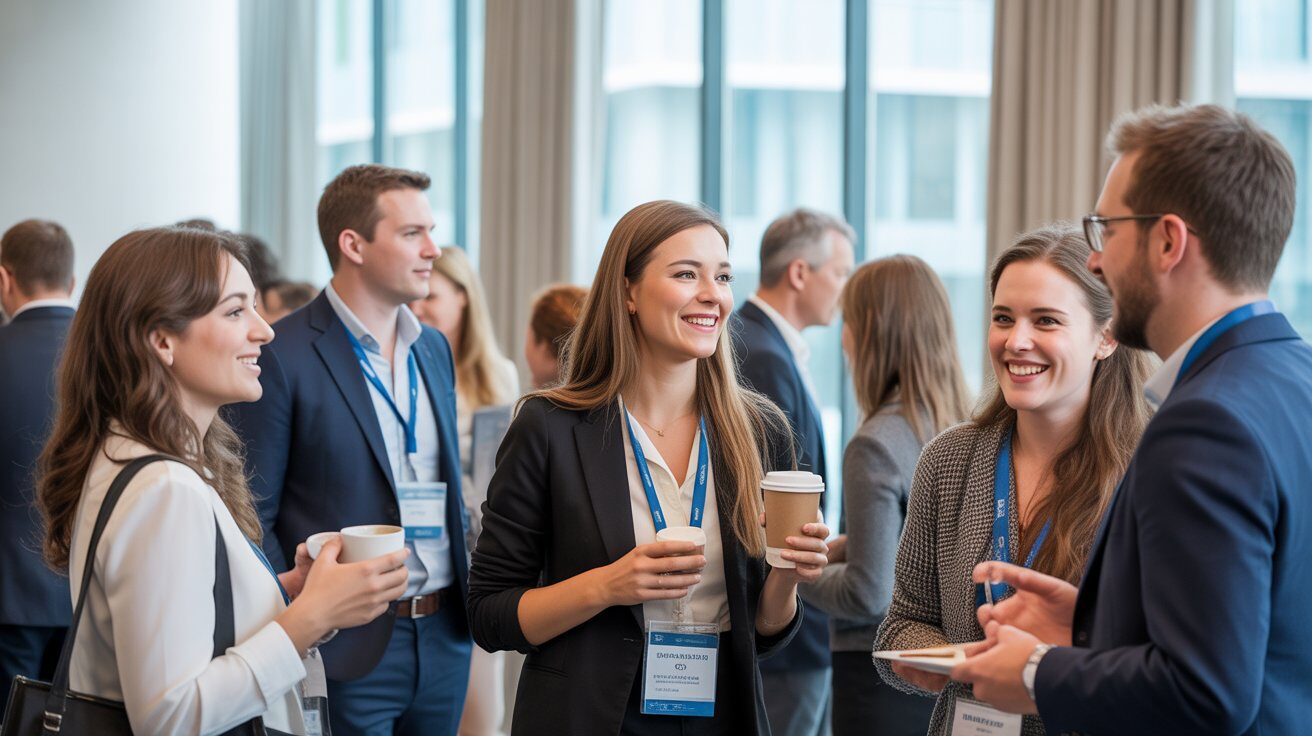
Green Organization: Values, Culture, and Relationships
Green organizations emerge as a reaction to the fatigue caused by the relentless pressure for performance. These are often knowledge-based organizations where hierarchy fades into the background, and relationships, values, and corporate culture take center stage. Companies often describe themselves as a “family,” emphasizing belonging, trust, and employee care. There is a strong focus on well-being, engagement, and employer branding, based on the premise that happy people deliver better results.
Crucially, this model prioritizes psychological safety and a positive psychological safety environment to foster better team dynamics. Methods like cross-functional collaboration, confidence voting (often using the Fist of Five), and dedicated teamwork training help the support team and new hires during employee recruitment feel valued. This alignment often extends to broader sustainable development goals, functioning similarly to mutual benefit associations where the collective good is paramount. A routine psychological safety assessment is often key here.
The Green approach can significantly boost loyalty and a sense of purpose. However, it places high demands on communication and the ability to resolve conflicts openly. If problems are swept under the rug for the sake of harmony, decision-making slows down, and tension remains hidden. While the Green organization appears to be the ideal many companies are currently striving for, these efforts sometimes remain only on bulletin boards while the reality remains strictly Orange. Even so, it is a positive first step. You have to start somewhere.
Case Study: Safety Culture and Error Management
In high-stakes environments like intensive care units or medical centers, the culture dictates the safety measures and error reduction strategies. Clinical managers and clinical staff must rely on robust error reporting systems rather than fear to catch medical errors.
When a specific error reference number or reference number is logged, it should trigger organizational learning rather than punishment. Knowledge brokers within service organisations play a vital role here, ensuring that the safety culture evolves effectively.
What is a Teal Organization and Why It Isn’t for Everyone?
You might be thinking: If Green sounds so reasonable, what is the point of Teal organizations?
The Teal approach takes things a step further. The organization operates without traditional hierarchy, utilizes a flat structure, and relies on self-management. People coordinate work directly with one another and make decisions where they have the most insight and responsibility. There is no waiting for approval from “upstairs”; issues are resolved on the spot.
For many companies, this is more of a directional guide than a final destination. It assumes that people want to—and can—take responsibility, speak openly, and handle conflict without supervision. Leadership still exists, but in a different role: setting the direction and guarding the framework and culture. In practice, firms often adopt specific Teal principles and combine them with what already works for them.
The “Best” Organization Type Does Not Exist
So, did you recognize your organization in one of these colors? Or did you think: “Actually, at our place, it’s a little different every week”? If you feel your company is a mix of colors, rest easy. That is the reality for most organizations.
The color typology doesn’t claim that one color is a victory and the others are obsolete. It shows that every mode of operation has its time and place. Sometimes you need pure performance, other times relationships, and sometimes strict order. And occasionally, you just need a quick decision without long debates. Therefore, companies routinely switch between different approaches depending on the situation, even if no one officially labels it that way.
If even a highly liberal company reverts to clear command-and-control during a crisis, it isn’t a step backward. It is the ability to react to what is actually happening, rather than clinging to an image that looks good on the surface. Academic theory often categorizes entities as business organisations, integrative organisations, economic organisations, or pattern maintenance organisations. Regardless of the label, successful resources management and a clear innovation ambition framework supported by solid innovation processes are what ultimately sustain them.
Key Takeaways About Organizational Types
Simply put, Laloux’s model helps you clarify how things really work in your company. Who has the final say? What happens when things go wrong? Why is responsibility taken automatically in some areas, while in others, people walk on eggshells around it?
The good news is that you don’t have to rebuild the entire company from the ground up. Change usually starts with small things—how you run meetings, how you give feedback, or how you react to mistakes. Ultimately, it is not spreadsheets and structures that decide the outcome, but people and their daily behavior. Laloux’s model serves as a map to help you understand where it makes sense to go and where you currently stand.