What do 💀, 👍, or 🧢 mean? A Glossary of Gen Z Emojis

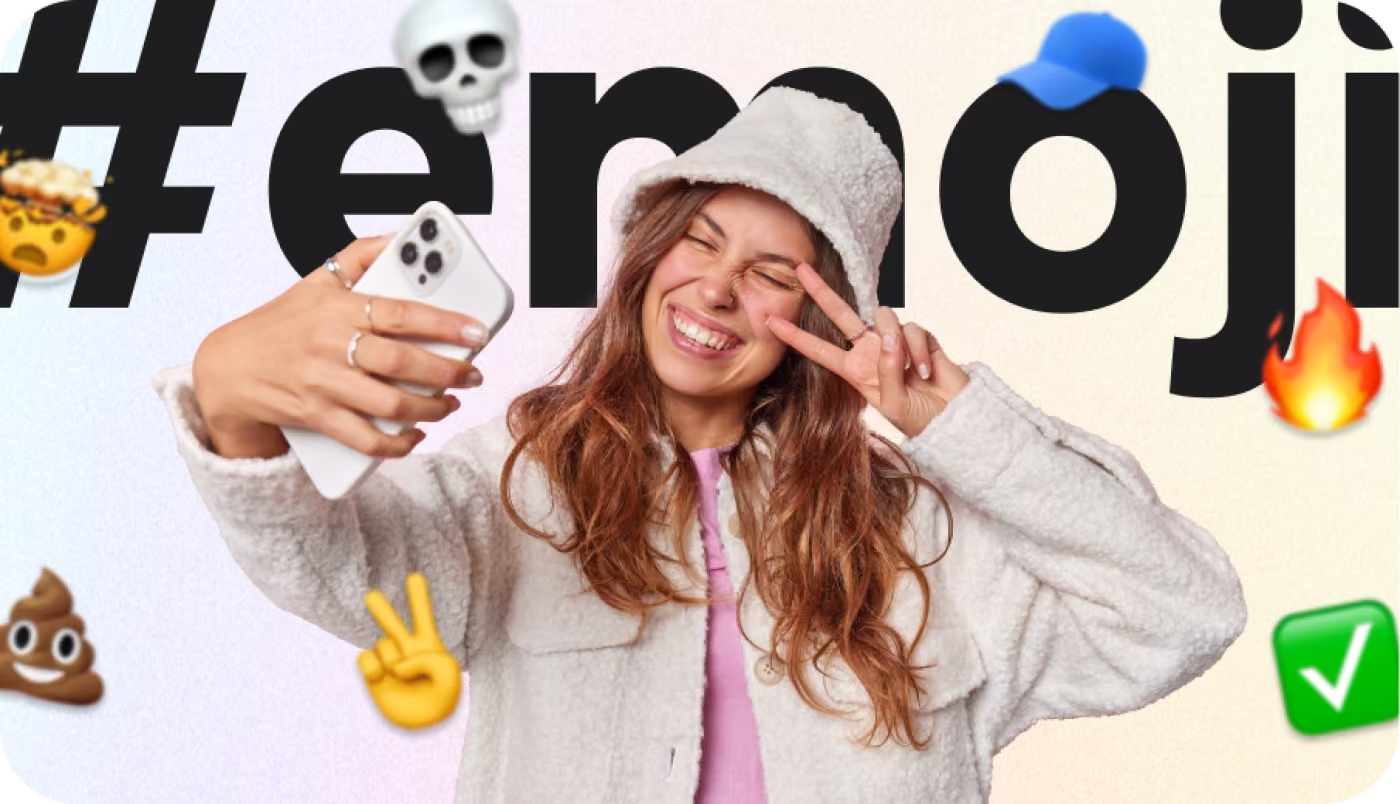
You can tell right away from the word “smiley” in the title that this text was written by someone 35+. A slightly younger author would probably use the term “emoticon,” while Gen Z almost exclusively says “emoji.” But these terminology shifts highlight an important detail: visual communication through emojis, GIFs, and memes has become an integral part of business language. Understanding emoji meanings is now essential. And just imagine — emoji meanings change from generation to generation.
The Rise of Workplace Chats
Slack, Teams, WhatsApp… The use of team communication platforms skyrocketed globally during COVID-19. These platforms share one common feature: fast team or channel-based messaging. Whether it’s daily conversations or major internal announcements, quick reactions flood in — offering valuable insights for managers, team leaders, HR professionals, or happiness managers tracking workplace sentiment.
And this is where a generational communication gap emerges, most clearly reflected in how different age groups use emojis. This evolution also highlights a broader shift in language tone. For Gen Z, irony and sarcasm are almost a cultural phenomenon. At the same time, formal caution, an effort to avoid offending anyone, and even well-disguised passive aggression play a role in workplace interactions — allowing employees to subtly vent frustration when communicating with a superior.
So… Even on LinkedIn?
Absolutely! Emojis have made their way into professional communication, and LinkedIn is no exception. Adding 🚀 or 👏 to a post? Why not! Emojis add personality to even the most formal posts and boost engagement. When you want to emphasize a message or lighten the tone, emojis are a great tool — and they are definitely not taboo on LinkedIn.
Decoding Gen Z’s Vocabulary
Born between 1995 and 2012, Gen Z speaks a language that even millennials often struggle to understand. Ever heard of “rizz” (charisma, the ability to charm), “cheugy” (outdated, uncool), or “delulu” (delusional, living in an illusion)? Try making sense of a sentence like: “He’s got major rizz, but his vibe is kinda cheugy — no, totally delulu.” 😆 It’s wild — but this is how Gen Z communicates. They use their own unique slang, and if you want to keep up, adapting is the only way forward.
The Power of Emojis
Emojis are no longer just cute pictures — they’re fully functional language tools. Why? Because they quickly convey emotions, shorten text, and help clarify the tone of a message. Plus, their meanings evolve over time. For example, millennials’ go-to 😂 is now seen as a cringey boomer cliché by Gen Z. The once-cool “😎” now often carries an ironic undertone.
Wondering how to type emojis on a keyboard? Use these shortcuts:
- Windows: Win + . (dot)
- Mac: Cmd + Ctrl + Spacebar
Not sure what an emoji means? Use an emoji translator — there are online tools that will instantly clarify its meaning. 😊
TOP 12 Emojis That Bosses 35+ Will 100% Misinterpret
Thumbs Up! 👍
The classic thumbs-up. Great. Well done. At least, that’s how millennials and older generations see it. But for younger generations, the meaning has shifted — unexpectedly. This once-positive emoji has turned bittersweet. If a younger colleague sends it to you, it could mean “whatever,” “do whatever you want,” or sarcastically “nice job.”
Example: Thanks for not interrupting me in the meeting today. 👍
Crying Emoji 😭
Most people use this emoji to express sadness, stress, or frustration. But for today’s 20-somethings, it represents strong positive emotions, being deeply moved, or even reacting to something adorable. In other words, it’s an emotional hyperbole at its finest.
Example: Did you see Richard’s dog today? 😭
Sweating Emoji 😅
Older generations use this emoji to describe situations that were physically or mentally challenging — or an awkward moment. But for Gen Z, this is the ultimate SOS signal when they’re seconds away from a breakdown but trying to keep it cool. In short, it’s the emoji equivalent of “I’m on fire, but I’m smiling through it.“
Example: Looking forward to another all-nighter fixing this presentation. 😅
ROFL Emoji 😂
The most boomer emoji. Likely the only one in an older executive’s Slack #random channel, used to lighten the mood. But to younger colleagues, it feels like an over-the-top forced laugh — like when your dramatic aunt overreacts to a joke she didn’t actually get. If Gen Z uses it at all, it’s pure sarcasm.
Example: Today, Robin explained inside jokes to the new guy in the break room. 😂
Skull 💀
So, what does Gen Z use instead of 😂 for genuine laughter? The skull. It signifies “this joke killed me”—in a good way. In Czech slang, it’s similar to saying “Zabil!” (meaning “He killed it!”). Word of caution: Avoid using the skull emoji as a symbol of boldness or toughness in front of younger colleagues — it won’t land as intended.
Example: Have you seen Mykíř’s latest video? 💀
Poop Emoji 💩
Older generations fall into two camps: those who think the poop emoji is too much, and those who see it as cheeky rebellion. For millennials, it’s clear: when something fails, lacks quality, or is just a mess, this emoji belongs there. Gen Z, however, uses it to call out immaturity or childish behavior.
Example: The boss talking mostly about himself during International Women’s Day… 💩
Baseball Cap 🧢
That random blue baseball cap emoji? It actually means “cap” = “lie.” This comes from slang where “capping” means lying. The symbol likely gained popularity around the 2020 U.S. elections, as a reaction to Trump’s “stolen election” claims. The blue cap became a counter-symbol against misinformation.
Example: Did you see the numbers our competitor put in their press release? 🧢
Grimacing Face 😬
Older generations use this emoji to express awkwardness or a close call. For Gen Z, however, it screams “cringe.” It’s a mix of disappointment and secondhand embarrassment — usually for someone who should know better.
Example: That press conference after the new president got elected… 😬
Clown 🤡
For older folks, this emoji represents fun or silly situations. For Gen Z, it means stupidity — usually directed at older generations. If a younger colleague adds a clown emoji in response to a higher-up, it’s not a compliment.
Example: So, what did you think of Peter’s new all-hands format? 🤡
Checkmark ✅
A simple green checkmark—a universal symbol for “read” or “approved.” But younger generations see it as bossy, authoritarian, and patronizing.
Example: The pre-holiday team meeting is mandatory. ✅
Heart Emojis ❤️
Heart = love? Not necessarily.
❤️ still means romantic love.
🤍 (white) = purity.
💙 (blue) = trust.
🖤 (black) = sarcasm or emo phases.
🧡 (orange) = friend zone.
So before sending a heart emoji, be sure you mean what you think you mean. 😄
Sad Face 😔
This is a generational clash. Millennials use 😔 or 😢 to express sadness. Gen Z prefers 🥺 (for pleading) or 😭 (for exaggerated drama). If you get a 😔 from a younger colleague, it might carry a completely different emotional weight than you expected.
The one responsible at Sloneek for ensuring everyone in the company is satisfied and enjoys their work. An enthusiastic People Care consultant for Sloneek customers.
Believes in perceiving people as investment rather than cost items, in lifelong learning and development as a way to prevent stagnation and an idea that the sustainability of business development does not lie solely in performance management.