

HR Processes Are Products – You Just Might Not Know It Yet

As HR professionals, we often fall in love with processes. We design meticulous workflows for recruitment, onboarding, and performance reviews. However, these systems often sit on a shelf. People rarely use them as intended, yet we treat this as a minor detail rather than a fundamental flaw.
In product design, the user remains the central focus. Designers do not prioritize documentation or rigid steps; they prioritize the human experience. They ask: Who is using this? What do they truly need? Where do they feel frustrated?
HR rarely asks these questions, and the results speak for themselves. Therefore, we must consider what HR can learn from the principles of product design.
Copying Big Tech Playbooks is Not a Strategy
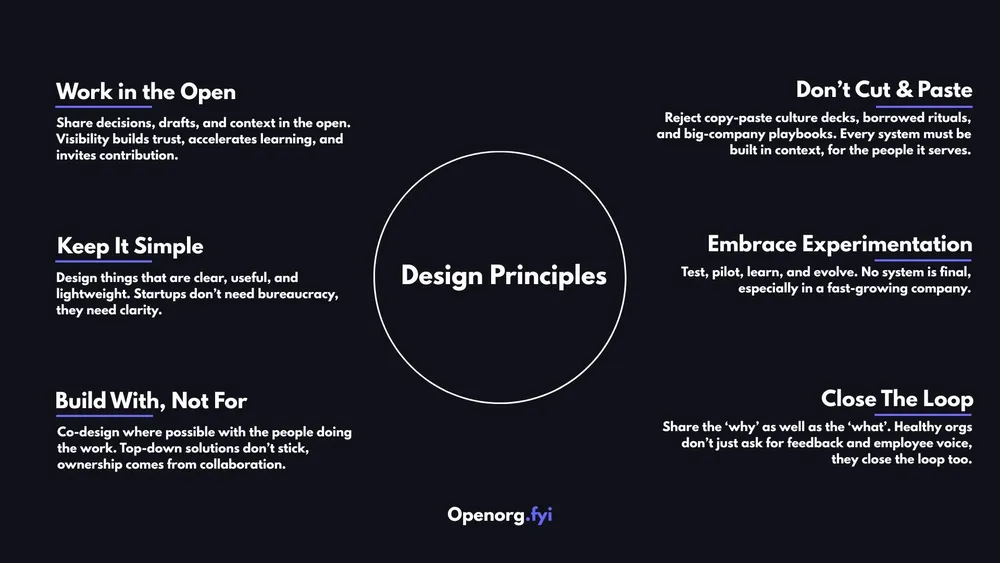
Many leaders attend conferences and hear about Netflix’s onboarding or Google’s OKR system. Consequently, they try to implement these same frameworks three months later. However, a fifty-person company has a different culture and different needs than a global giant.
Systems must exist within a specific context to serve the right people. You are likely not Google, and that is perfectly fine. HR suffers from a chronic pattern of borrowing solutions for problems they don’t actually have. Because of this, many initiatives fail before they even begin.
Design With People, Not For Them
Solutions imposed from the top down rarely gain traction. True ownership only emerges through genuine collaboration. HR professionals understand this intellectually, yet they often do the exact opposite in practice.
A typical HR team might design a new performance review system in isolation. After management approves it, they announce it to employees with great fanfare. Nevertheless, staff often revert to old habits within a year or openly boycott the new process.
You can avoid this by asking one simple question at the start: Who will actually use this process and what do they need from it? This approach is not just about democracy; it is about common sense.
Simplicity Requires Discipline
HR tends to add unnecessary layers to every task. We create four-page forms when a single conversation would suffice. We build seven-step processes where three steps worked perfectly well. Although each layer begins with good intentions, they eventually create a system that everyone hates.
Complexity does not prove that a process is serious or professional. Instead, it usually proves that no one had the courage to cut the fluff. Simplicity is a discipline that requires constant effort.
Test Early and Iterate Often
In HR, we often treat processes as final results rather than hypotheses. We might only update a performance system every three years. Usually, this happens only when the friction becomes impossible to ignore.
Product designers operate differently. They release a version, track user behavior, and fix what fails. HR can adopt this same agile mindset. Start with a pilot group, gather quick feedback, and adjust before the full rollout. Do not wait for perfection, because a “perfect” system is usually just an outdated one.

Why Design Matters for Your Bottom Line
HR is not about paperwork. It is about designing an environment where people can grow and thrive. Employees either embrace your processes or find ways to bypass them entirely. Both reactions provide a signal about your work.
If your team ignores your hiring or onboarding workflows, you do not have a communication problem. You have a design problem. You cannot fix a bad design with more training; you fix it by building something that actually works for your people.