How Mancala Gaming scaled from 40 to 130 employees without HR collapsing
⚡ 90 % simpler
Sloneek handles onboarding from NDA to account activation. Hiring seven new people a month runs without HR’s manual work.
🌍 3 countries
Mancala runs a distributed team across three countries. Sloneek brings absences, holidays and attendance into one overview.
💡 2‑person HR
Two HR people support 130 employees without becoming a bottleneck. Managers see their teams directly, and leadership gets real-time visibility.
- Category
- Tech company
- Company size
- 130+

From Excel to automated HR during a year of rapid growth
Sloneek helped us handle growth from 40 to 130 employees without our HR falling apart. Yearly absence tables, vanishing vacation records and manually onboarding seven new people every month are gone. Everything is now in one system, automated and accessible to the whole company in real time, including our international colleagues.
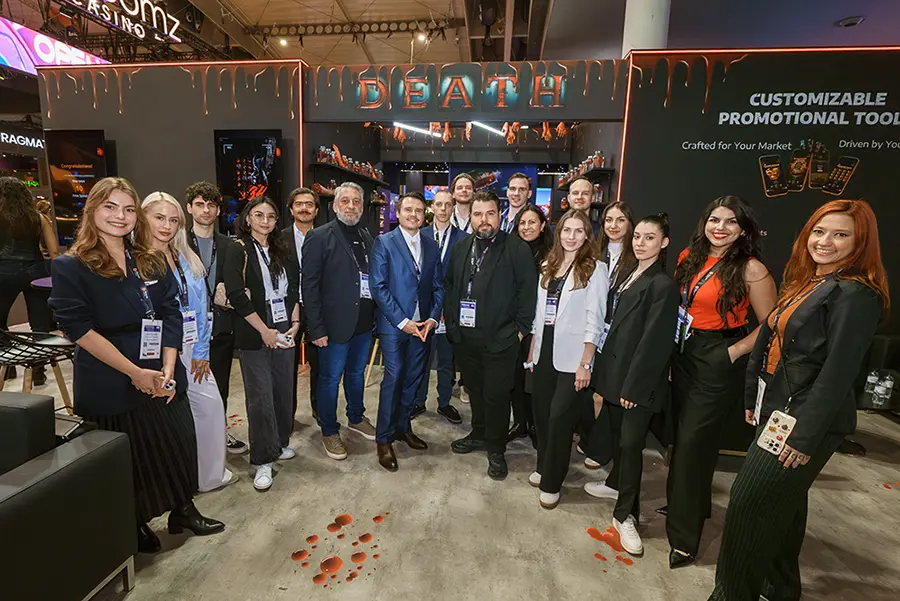
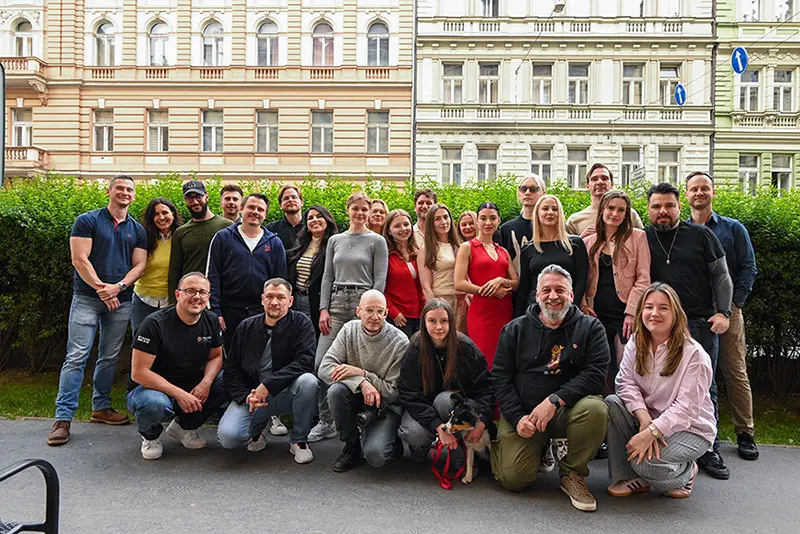
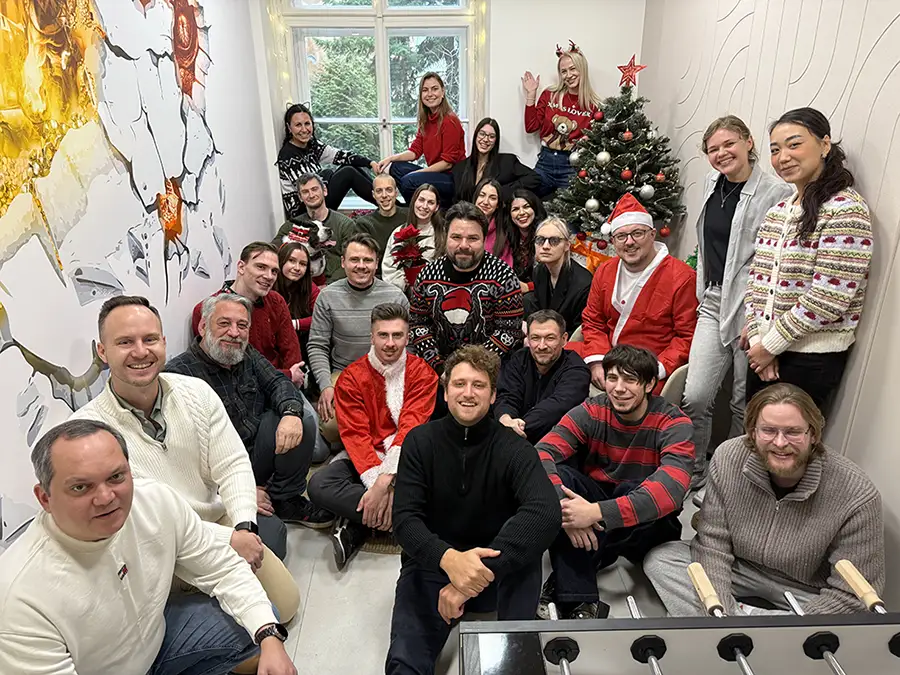
Mancala Gaming is a gaming studio with its own creative team, development (backend and frontend), analysts, testers, marketing, sales and account management. The company has grown significantly over the past few years, from roughly 40 employees to 120–130 people. Part of the team is based in the Czech Republic, the rest are international contractors, for example from Serbia. The HR department is staffed by two internal people: an HR manager and an HR admin in charge of contracts, reports and day-to-day administration. Hiring runs mostly through external recruiters.
At a glance
- 90% simpler HR processes
- 2-person HR team supporting 130 employees
- 7 hires / month with fully automated onboarding
- 3 countries managed in one system
HR at Mancala Gaming
A two-person HR team supports developers, analysts, testers, a creative studio, marketing, sales and a legal team across multiple countries, in both Czech and English. Hiring peaked at seven new people per month.
The breaking point: when growth made Excel unsustainable
For years, Mancala's entire HR ran in an Excel spreadsheet built by a former office manager. Typing "V" turned a cell green for vacation, and a second tab tallied days. It worked at 40 people. It started cracking around 70 to 80.
From there, the picture is one most growing HR teams will recognize. Each new year meant rebuilding the spreadsheet from scratch and sharing it again. Vacation entries could be overwritten with no audit trail. Hiring climbed to seven new people a month, and Excel quietly fell behind. Mancala's contractors in Belarus, Serbia and elsewhere added national holidays and different absence rules that no manual table could keep up with.
The real cost wasn't a single dramatic failure. It was the slow loss of control: forgotten updates, missing context, reports that no longer felt trustworthy.
"With that many employees, working in Excel made it easy to forget or lose things, and our data wasn't always entirely accurate." – Polina Zotova, Mancala Gaming
"Excel lacked the automation Sloneek gives us today. As the headcount kept growing, we more and more often simply forgot to update some information in the spreadsheet." – Polina Zotova, Mancala Gaming
"Once we hit seventy, eighty people, we started feeling that Excel was getting hard to use. I'd been unhappy with it from the beginning, but I joined Mancala when the company had already been running on Excel for four years." – Polina Zotova, Mancala Gaming
Choosing the system
Polina, Mancala’s HR Manager, already knew Sloneek and saw it as the natural replacement for Excel. Three factors made the decision easy for the team and leadership: the system was intuitive, employees could adopt it quickly, and Sloneek offered direct local support when needed. As HR complexity kept increasing with rapid growth, leadership approved the rollout within a few weeks. The implementation itself was fast and largely self-guided: employees were onboarded into Sloneek within days, with international contractors added shortly after, allowing the team to start seeing value almost immediately.
"Sloneek is a Czech company, so you can actually talk to them. That sealed it for me." – Polina Zotova, Mancala Gaming
How Sloneek helped
Sloneek replaced Excel across the key HR agenda: absences, onboarding, document signing, payroll reports and people overview. Employees enter their own data, onboarding workflows run without HR's involvement, and payroll inputs are generated directly from a report.
"The system is intuitive enough that we figured out the basics ourselves and didn't have to ask much. I set it up once, and now I only get notifications that the process completed successfully and the documents are signed." – Polina Zotova, Mancala Gaming
HR is no longer the bottleneck
The biggest organizational shift is who has access to information. Managers no longer have to ask HR for basic data about their own teams. Leadership no longer waits for a manually compiled report. HR stops being the gatekeeper and becomes a partner.
"We constantly had to check and verify the data. Today managers have a direct view of their employees in the system." – Polina Zotova, Mancala Gaming
From storing HR data to acting on it
The clearest example of intelligent HR at Mancala is Sloneek Intelligence. Before, HR stored information. Now HR can instantly access, interpret and use it. Asking "who joined in March 2026?" returns a structured answer in seconds, not minutes of digging through records.
"I used it ten minutes ago. I needed to know who joined in March 2026. It gave me a beautiful overview: start date, team, position. Sloneek Intelligence was the biggest pleasant surprise for me." – Polina Zotova, Mancala Gaming
Mobile access for an international team
The mobile app plays a practical role for the whole team. HR uses it for quick day-off and sick-leave requests, and international colleagues tested it on the day of the interview. As Polina puts it, "I'm not at my computer every day," and the mobile app is essential for that kind of working pattern.
Results
Deploying Sloneek brought measurable improvements across the entire HR agenda. Polina estimates processes are around 90 percent simpler. Where information used to be retyped between tables and discrepancies checked by hand, the system now does the work itself.
"All our HR processes have become much more structured and transparent. Leadership has access to all the information they need, which gives them a far better overview of the entire organization." – Polina Zotova, Mancala Gaming
Specific areas where the savings are biggest:
- Payroll: the Sloneek report is fed directly to payroll. As Polina puts it, "the payroll is already done because we used the report."
- Onboarding: new employees enter their own data, sign the NDA and get activated automatically. HR only receives notifications about progress.
- Absences: no more manual yearly tables and lost records. A transparent overview, including international holidays.
- Document signing: integrated directly into the workflow, with no separate tools.
- Reporting: Sloneek Intelligence enables a quick query into the data without building a report by hand.
The transformation at a glance
Before: Reactive HR, fragmented tools, manual complexity, leadership data that no one fully trusted.
After: Structured, scalable and intelligent HR operations with real-time visibility for managers and leadership.
What's next
Mancala is now exploring time tracking for part of the company, potentially covering 40–50% of employees. The team also sees opportunities for additional localization and workflow flexibility as their operations continue to scale. The company is also excited by our roadmap.
Advice for other companies
According to Mancala Gaming, the decisive moment is when a company outgrows the size Excel was designed for. For small companies with just a few employees, Excel can still get the job done. But as soon as you want to improve efficiency, run a system that's usable for employees and reliably handle automation, it's time to switch to an HRM.
"If you want to increase efficiency and have everything nice and usable for your employees, I definitely recommend an HRM system: something understandable, beautiful, where you can assign tasks and sign documents. If you want to spend time on micromanagement, feel free to stay in Excel." – Polina Zotova, Mancala Gaming
"Sloneek brought order, automation and reliable data for decision-making to our HR." – Polina Zotova, Mancala Gaming


I’m👇
- co-founder of the Sloneek HR system, with which we help individuals and companies simplify the processing of complex HR agendas
- The one who is responsible for customer satisfaction at Sloneek and who is the first to have their dissatisfaction fall on his head 🙂
- an enthusiastic promoter of the idea of corporate training as an investment and managing people through competences.
I believe 🙏🏻
- in lifelong learning and development as a way to prevent stunting
- that the sustainability of corporate development is not just about performance management