Top 10 Most Searched HR Software for Startups Compared


The world of human resources changes rapidly. Therefore, countless HR solutions exist today. Choosing the right one is no longer a simple task. This is especially true when seeking the best hr software for startups at a specific growth stage. Consequently, this article dives into a detailed comparison of top HR platforms.
We cover solutions for startups and small businesses. In addition, we explore comprehensive enterprise tools and highly affordable alternatives. After all, smaller teams need systems that make perfect sense for them. Ultimately, our goal is quite simple. We want to help you choose the right system confidently. Specifically, you need software that supports growth without breaking the bank. Furthermore, it must save valuable time for both HR professionals and managers.
What is HR Software?
HR software is often called an HRIS or HRMS. Basically, it is a comprehensive solution designed to simplify your organization. It seamlessly centralizes key HR processes. In addition, it functions as an enterprise tool to manage employee data. It streamlines your daily HR agenda and provides advanced skill tracking and matrix evaluation.
You can also run detailed reporting and analytics across the entire employee lifecycle. Whether evaluating basic human resource information systems, hris softwares, or comprehensive hr technology platforms, finding the right human resources software depends on your specific operational demands.
For hr tech startups and broader hr software startups looking into hr tech, opting for a customizable solution or a secure single-tenant solution with a high level of customization and advanced features at a reasonable price per user per month makes startup hr software a critical early investment.
Early-stage startups might not need HR software on day one. However, the situation changes drastically as the company grows. Employees, benefits, and payroll demands inevitably increase. At this point, structured people management becomes absolutely essential. Therefore, hr software for startups and small businesses starts making perfect sense.
These systems help manage growth without creating unnecessary chaos. Furthermore, they store all data securely in one place. Thus, they create a solid foundation for future strategic HR decisions.
How Does HR Software Work?
HR software centralizes data and automates complex processes. Consequently, this dual action forms the foundation of modern HR tools. When adopting hr software for startups, small businesses rely heavily on these core principles.
- Data Centralization: The software collects and stores employee data securely. This centralized database is easily accessible to authorized users. Therefore, it is crucial for fast-growing teams needing strict data control.
- Automation: The system automates highly routine tasks. For example, it handles payroll processing, benefits administration, and attendance tracking. Small business software drastically reduces manual errors here. Modern hr packages for small businesses often include payroll management, global payroll capabilities within payroll software, and benefits management software alongside employee scheduling software for monitoring work hours and time and attendance tracking. Driven by agile hr software development and hrms software development, these platforms efficiently handle your daily operational demands.
- Employee Self-Service: Many systems offer independent user portals. Employees can update their details or request time off. In addition, they can access HR documents directly. As a result, this feature saves immense time for busy managers.
- Integration: Comprehensive solutions connect with other critical business systems. Thus, they integrate smoothly with accounting or recruitment applications. Consequently, these connected platforms improve data flow and overall workflow efficiency.
- Reporting and Analytics: The software provides vital analytical tools. HR professionals use these insights to make important leadership decisions. Furthermore, quality platforms deliver clear data on performance, turnover, and labor costs.
- Compliance: Systems help maintain strict compliance with labor laws. They track legislation and manage all required documentation carefully. For instance, they handle personal data processing consents. Often, these automated services replace missing internal capacities for startups.
- Scalability: The platform naturally grows alongside your organization. It adapts easily to sudden changes in company size. Moreover, it assists with structured onboarding and shift planning. This scalability is absolutely critical for rapidly growing startups.
- Security: Uncompromising data protection remains a top priority. The system secures sensitive employee information against any unauthorized access. Today, robust security is the baseline standard for top-tier HR software. Protecting your digital infrastructure requires a comprehensive security service and security solution to defend against online attacks, such as those exploiting a malicious sql command, malformed data, or an unauthorized word or phrase that could compromise the site owner.
Key Benefits of Implementing HR Software
- Efficiency: Automating HR processes sharply reduces manual workload. Therefore, small businesses constantly seek these time-saving tools.
- Talent Management: Systems assist actively with recruiting, onboarding, and retention. In addition, the best tools support long-term career path development.
- Employee Performance: Performance management features enable highly objective evaluations. Thus, they foster continuous and meaningful employee development.
- Compensation Management: Platforms facilitate fair and highly competitive salary structures. This feature is especially important in dynamic startup environments.
- Actionable Insights: Predictive analytics provide incredibly crucial business data. As a result, you can strategically plan your future HR moves.
- Employee Engagement: The software frequently measures overall satisfaction and engagement. Ultimately, this data boosts productivity and helps retain top talent.
- Holistic Management: For dedicated hr teams handling workforce management and optimizing startup workflows, utilizing hr software small business and small business hr management software delivers massive value. By incorporating real-time analytics to generate any necessary analytics report, alongside tools like employee surveys and employee recognition software, organizations can easily monitor their workforce health.
When Should You Consider HR Software?
Manual processes often make HR tasks time-consuming and error-prone. Simultaneously, regulatory compliance and reporting requirements become increasingly complex. Your company headcount expands rapidly month over month. Therefore, you desperately need a highly scalable solution. In addition, managing data, payroll, and benefits strictly demands modern tooling.
Furthermore, as you expand into international hiring, navigating global compliance, complex tax laws, and visa applications — often previously requiring an expensive immigration law firm — becomes manageable with the best hr software for startups. By adopting specialized hr for startups and targeted hr tools for startups, you secure a streamlined workflow without overwhelming your administrative team.
Tracking employee performance eventually becomes critical. Furthermore, this ties directly into ensuring fair compensation. You clearly want to improve talent management and overall operational efficiency. Consequently, you require comprehensive data for much better strategic planning. As mentioned earlier, HR software isn’t strictly for large corporations. Rather, it helps growing teams analyze data right from the beginning. Thus, you solve procedural bottlenecks before they hinder company growth.
The Cost of Basic HR Software
Prices vary significantly based on the chosen vendor. In addition, the number of users and required features greatly impact the final cost. Common pricing models include the following standard structures:
- Monthly or annual software subscriptions.
- One-time platform licensing fees.
- Specific customization and integration costs.
Pricing heavily depends on your required level of customization. Whether you need a highly adaptable customizable solution or a dedicated single-tenant solution, costs will reflect the advanced features you select to meet your operational demands. Basic hr software for startups can start around a few hundred dollars annually, or just a few dollars per user per month. Conversely, advanced platforms with extensive enterprise features can cost thousands.
Essential Features to Look For
Finding the right system requires carefully considering several core features. Specifically, these exact functions can drastically improve your daily HR operations. Teams investing in hr software for startups definitely benefit the most from these capabilities. Usually, these specific teams face heavily limited capacities and rapid growth. Therefore, they need cleanly controlled data without unnecessary technical complexity.
- Workflow Management: Track time, attendance, and vacations highly effectively. Moreover, plan shifts intelligently and automate daily workflows. Quality software ensures optimal workforce coverage effortlessly.
- Absence Management: Utilize dedicated tools to track employee leave and manage requests. Consequently, you guarantee proper coverage during sudden absences. This specific feature is fundamental for any startup HRIS.
- Automated Approvals: Look for systems that trigger automatic approval chains for time-off requests and expense reports. Ultimately, this specific functionality is a primary reason companies seek modern platforms, as it significantly reduces administrative bottlenecks for HR departments.
- Predictive Analytics: Gain highly valuable insights into your workforce. Subsequently, use this exact data to plan capacities, costs, and growth. Advanced platforms actively let you work with data strategically.
- Talent Analytics: Obtain critical information on employee performance and turnover. Furthermore, use these exact metrics to support internal talent management.
- Recruitment Process: Simplify hiring remarkably by managing job ads and applicant tracking. In addition, streamline your interview scheduling seamlessly. Use built-in collaborative tools to align your hiring team perfectly. To elevate your talent acquisition, integrating applicant tracking systems for candidate tracking alongside an ai-powered platform featuring an ai recruiter, ai-powered tools, and ai-powered candidate scoring can optimize everything from crafting job descriptions for your careers page to streamlining candidate onboarding through comprehensive recruitment and onboarding automation.
- Learning Management: Organize employee training and easily manage educational courses. Thus, you actively support ongoing professional skill development.
- Mobile App: Give employees incredibly easy access to training materials. Additionally, allow them to manage personal HR functions directly via mobile.
Top HR Solutions Compared
We have prepared a clear overview of the most searched HR platforms. Please review this detailed comparison carefully. Ultimately, you can choose the exact one that perfectly fits your specific needs. Finding the best hr software ranges from adopting free hr software for startups and hr software open source tools to exploring a comprehensive online hr company providing hr enterprise software, software it solutions, or dedicated hris for startups.
Whether you evaluate Workable HR, Workflow Studio, Rippling Solutions, or standard hr and payroll software for small business, look for essential capabilities like leave and absence management, legal document management, a self-service portal, and mobile accessibility.
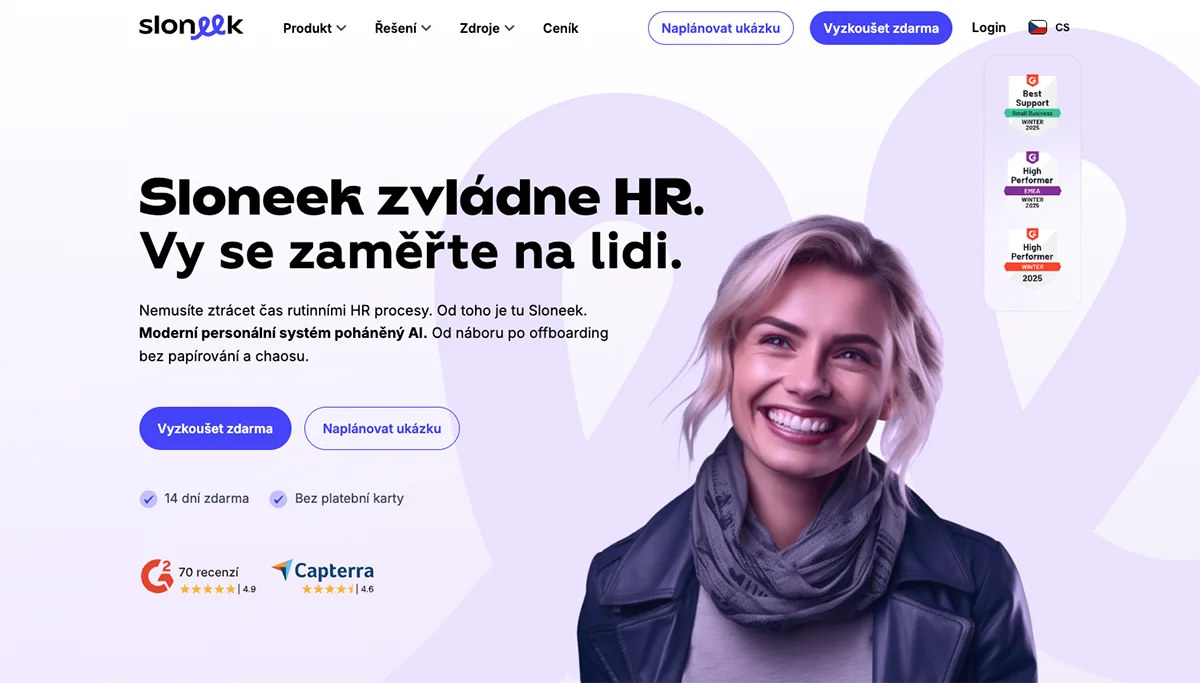
Sloneek
- Features: It offers a comprehensive suite focused on the entire employee lifecycle. In addition, it perfectly handles attendance management and various software integrations.
- Price: It ranges from roughly $4 to $6 per user monthly. Naturally, this exactly depends on your chosen subscription plan. There are absolutely no hidden fees for extensions. Consequently, this provides a massive competitive advantage.
- Pros: It boasts high affordability, live demos, and a generous 14-day free trial. Furthermore, the implementation is fast, and customer support is excellent. This modern solution is definitely suitable for startups.
- Cons: It focuses solely on HR functionalities. Therefore, there is certainly room for broader business management improvement.
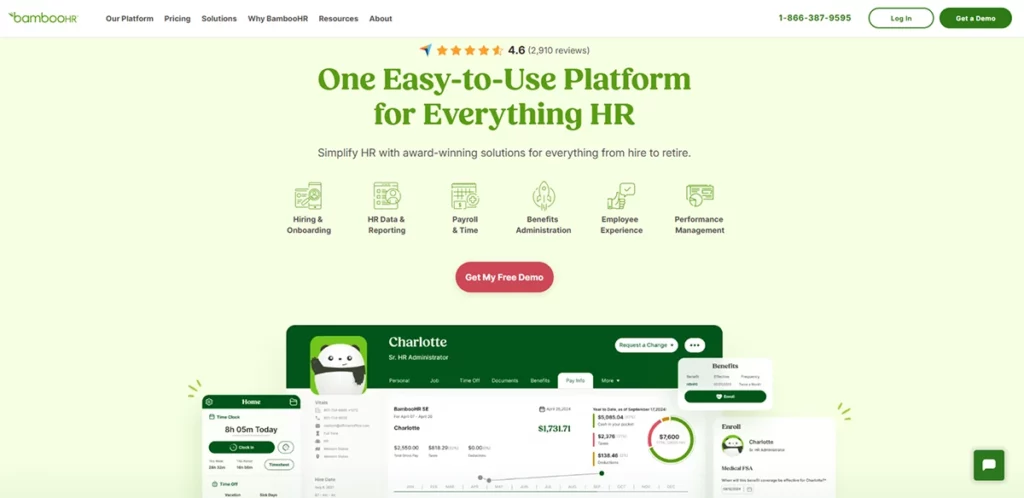
BambooHR
- Features: This is an incredibly easy-to-use platform covering all core functions. Specifically, it focuses heavily on employee management, onboarding, benefits, and reporting.
- Price: The basic entry plan starts around $6 per user monthly.
- Pros: The system is remarkably user-friendly and intuitive. Moreover, it offers truly excellent self-service features for employees.
- Cons: It has somewhat limited advanced features and hidden fees for add-ons. Generally, it suits larger enterprises slightly better. However, ambitious startups still frequently seek it out.
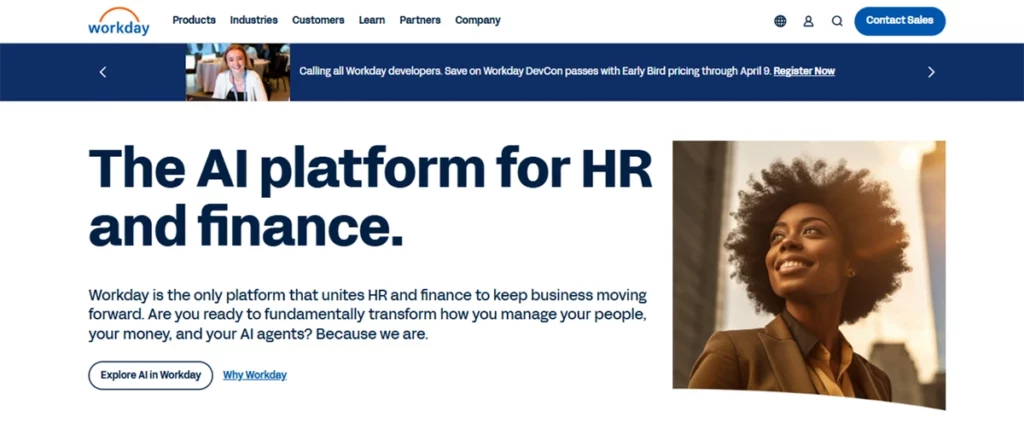
Workday
- Features: This represents a highly advanced, full-scale enterprise platform. Furthermore, it is built specifically for complex talent management and detailed analytics.
- Price: It is financially viable mostly for very large corporations. This is largely due to the extensive premium add-ons they offer.
- Pros: It delivers highly advanced, industry-leading features. Additionally, it provides incredibly comprehensive real-time business insights.
- Cons: The system is overly complex for standard startups. Consequently, the extremely high price tag quickly deters smaller businesses.
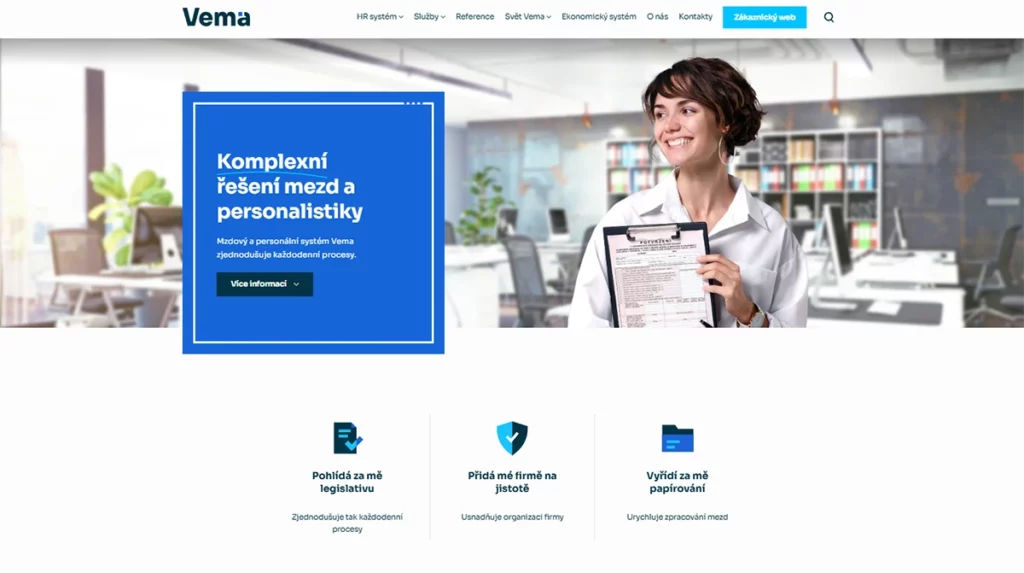
Vema
- Features: This software successfully provides payroll processing and personnel data management. In addition, it covers attendance, evaluations, training, and recruitment. All features are fully accessible as a reliable cloud service.
- Price: They offer heavily discounted product packages. Subsequently, these are hierarchically organized strictly by feature scope.
- Pros: You can easily utilize a highly reliable cloud service. Moreover, they provide regular software development and legislative updates. You can purchase a comprehensive system or simply use variable modules.
- Cons: The company unfortunately does not publish transparent pricing online. Because it is a highly custom solution, implementation can eventually become expensive.
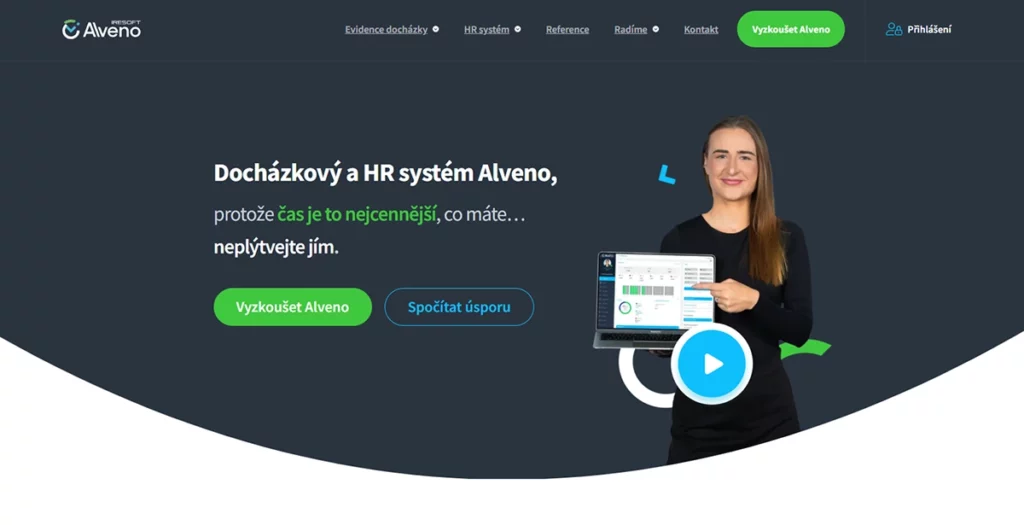
Alveno
- Features: It heavily includes an attendance system, HR modules, and biometric readers. Furthermore, it easily handles document generation, electronic signatures, and process automation.
- Price: Prices depend heavily on your exact employee count and package type. For example, a standard package for 50 employees costs around $125 monthly. Naturally, prices strictly increase as you add more features.
- Pros: System implementation is remarkably fast and easy. Additionally, it offers continuous online access and a highly secure cloud solution. It clearly features quality support and continuous system development.
- Cons: The price scales quite rapidly with employee count and feature requirements. Unfortunately, the system entirely lacks recruitment, performance management, and engagement tracking modules.
Giriton
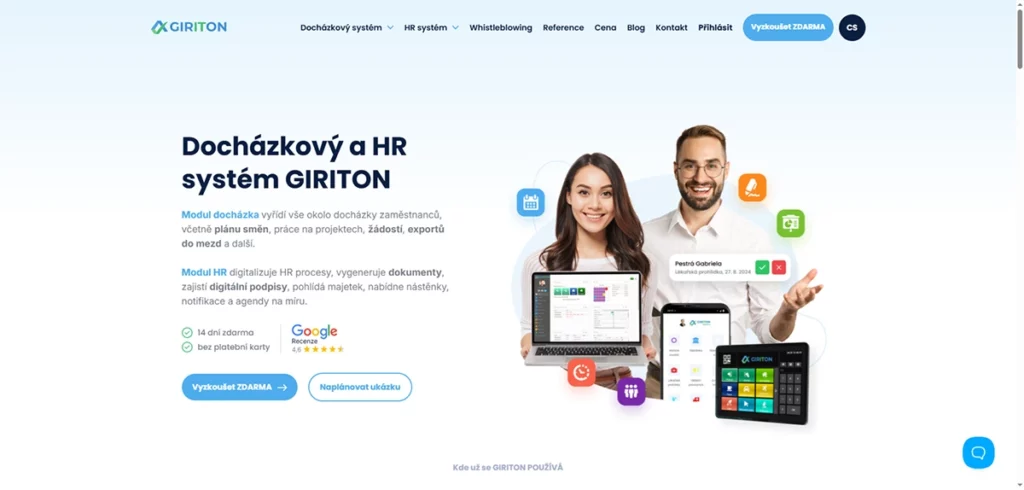
- Features: You can freely choose an attendance system or an HR module. Alternatively, you can easily add compliance whistleblowing features. The system additionally tracks assets, fleet, training, and medical checks.
- Price: The monthly cost clearly varies based on the user count. Specifically, it securely starts around $40 monthly. Furthermore, you can extensively test the system free for 14 days.
- Pros: It offers excellent process automation and highly reliable online access. In addition, the modern mobile app simplifies attendance tracking and document generation.
- Cons: Pricing fluctuates significantly based on users and utilized features. Similarly, the system does not actively cover recruitment, talent management, or engagement measurement.
Okbase
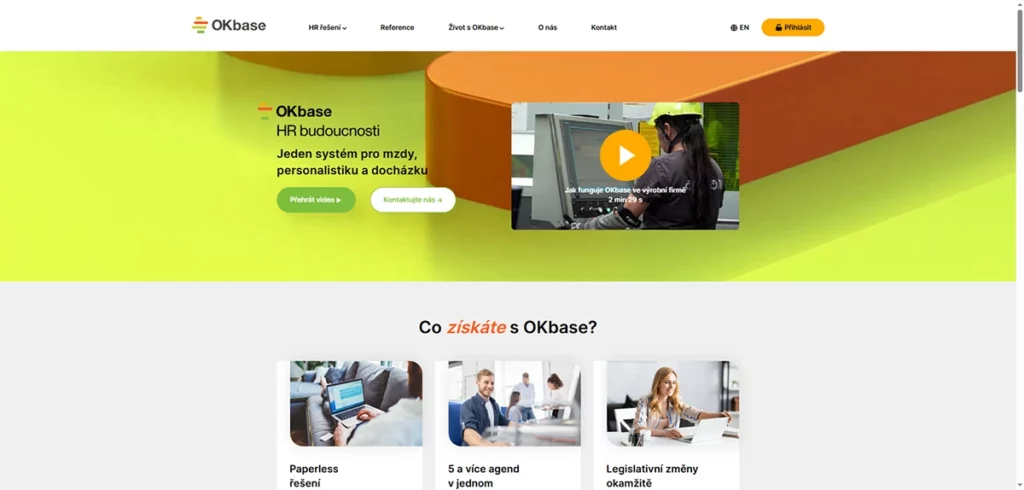
- Features: This system effectively handles personnel, payroll, attendance, and shift planning. Moreover, it successfully manages digital documents, legislative changes, and process automation. It also uniquely provides an internal employee intranet for company news.
- Price: Specific pricing is sadly not specified on their main website. Therefore, you must proactively contact a sales representative for details.
- Pros: It successfully integrates multiple functions cleanly into one cohesive system. Additionally, it actively supports legislative changes and AI-driven shift planning. The technical customer support is highly rated.
- Cons: The final financial cost depends entirely on the implementation scope. Consequently, any requested additional services will rapidly increase the base price.
Plusportal
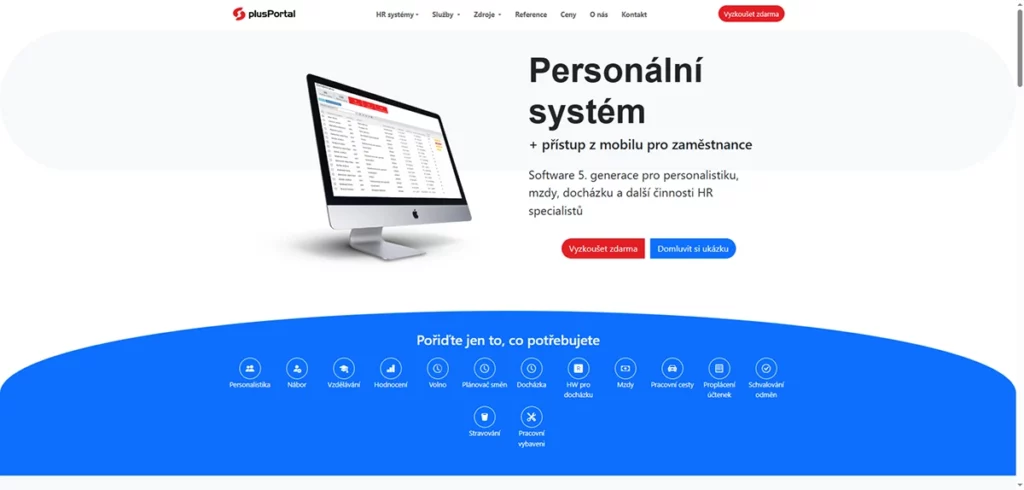
- Features: This highly comprehensive system cleanly includes recruitment, training, and evaluations. Furthermore, it completely covers attendance, shift planning, payroll, and business trips.
- Price: The monthly cost simply multiplies the user count by the package price. Usually, it cleanly starts around $3.50 per active employee.
- Pros: The system is remarkably user-friendly and highly customizable. In addition, it offers strong mobile access and significantly simplifies administration. You can even securely register agency workers and contractors alongside regular employees.
- Cons: System specifications and exact pricing depend entirely on company requirements. Unfortunately, specific module packages are strictly available for 50 to 200 employees only.
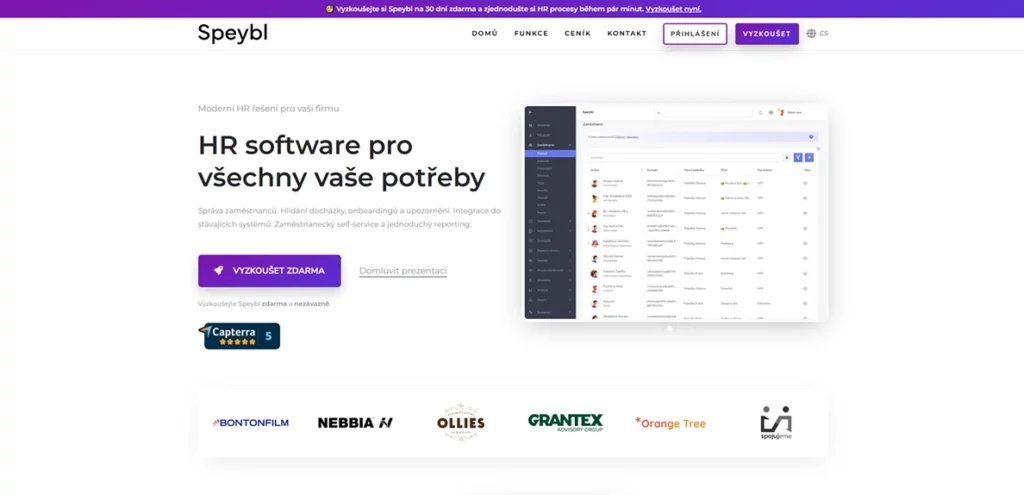
Speybl
- Features: The system easily manages personnel data, attendance, payroll, and training. Additionally, it actively handles KPIs, scheduling, reports, and digital documents. It also cleanly includes structured onboarding checklists.
- Price: Customers can flexibly choose monthly or annual payments. Alternatively, they can officially request a highly individual approach. The company generously provides a full 30-day trial version.
- Pros: It requires absolutely no installation because it is a web application. Furthermore, employees get full and unrestricted self-service access. If you have under five employees, some core services are completely free.
- Cons: The final monthly price depends strictly on the specific chosen functionalities.
Conclusion
Choosing the right hr software for startups clearly plays a vital role in modernizing human resources. Naturally, this highly applies to growing companies and small businesses alike. These platforms actively help establish processes strictly during early growth stages. Consequently, they correctly create a remarkably strong foundation for future business development. This article successfully explored key features and the distinct benefits of various solutions. Furthermore, we clearly discussed the exact right time to implement these specific tools.
Your final choice always depends entirely on your specific needs and budget. Additionally, you must honestly consider your company’s current growth stage. Whether you strictly choose a basic tool or an enterprise platform, the goal remains identical. Ultimately, you explicitly want to streamline your HR agenda and data management. Implementing the exact right system significantly improves overall efficiency and data accuracy. Therefore, your dynamic organization will be exceptionally well-prepared for competitive HR challenges.

The one responsible at Sloneek for ensuring everyone in the company is satisfied and enjoys their work. An enthusiastic People Care consultant for Sloneek customers.
Believes in perceiving people as investment rather than cost items, in lifelong learning and development as a way to prevent stagnation and an idea that the sustainability of business development does not lie solely in performance management.